

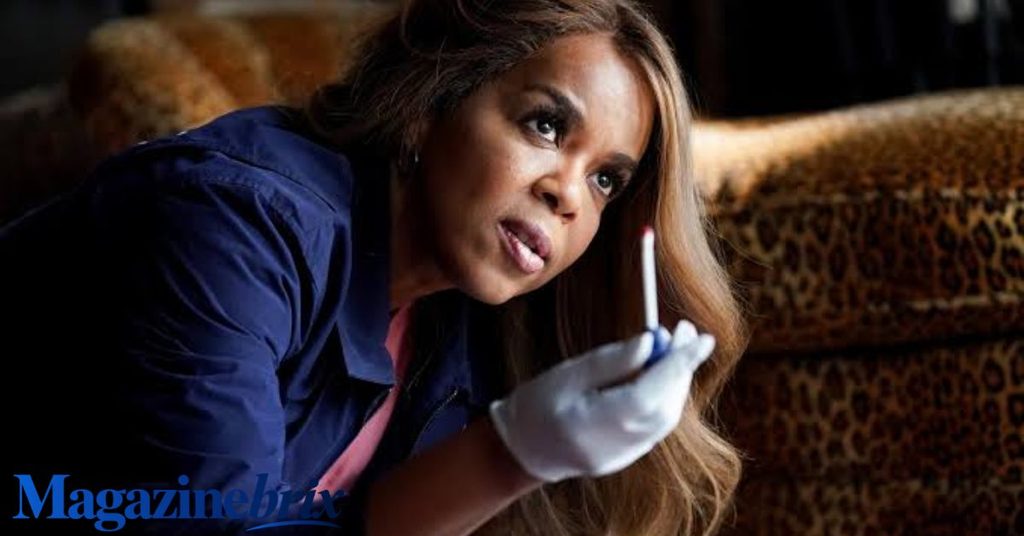
Paula Newsome is a talented American actress best known for playing Maxine Roby in CSI: Vegas and appearing in Spider-Man: No Way Home and Barry. Her impressive acting career has attracted attention, but many viewers also search for information about her walking pattern and possible disability.
The truth about Paula Newsome disability remains unclear because no specific medical condition or diagnosis has been publicly confirmed. Questions about her limp, health, and possible mobility challenges continue to generate online speculation. Understanding the difference between verified information and rumors helps readers appreciate her career while respecting her personal privacy.
Who Is Paula Newsome? A Strong Force in Hollywood
Paula Newsome is an accomplished American actress recognized for her commanding screen presence, emotional depth, and memorable performances across television and film. She has built a respected career through decades of work, appearing in popular productions such as CSI: Vegas, Spider-Man: No Way Home, Barry, Grey’s Anatomy, The West Wing, and Chicago Hope. Her portrayal of Maxine Roby in CSI: Vegas introduced her to an even wider television audience. Alongside her professional achievements, online searches about Paula Newsome disability have attracted attention because viewers have noticed a difference in the way she walks. However, public curiosity should be separated from confirmed medical information.
Notable appearances include:
Paula Newsome has worked across different genres, demonstrating the versatility expected of an experienced television and film performer. Some of her recognizable screen appearances include:
- CSI: Vegas: Played Maxine Roby, the respected leader of the Las Vegas crime laboratory.
- Spider-Man: No Way Home: Appeared in the popular Marvel superhero film, expanding her presence in mainstream cinema.
- Barry: Featured in the critically acclaimed dark comedy television series.
- Grey’s Anatomy: Appeared in the long-running medical drama.
- The West Wing: Added a notable political television production to her acting credits.
- Chicago Hope: Appeared in the medical drama known for its character-driven storytelling.
These performances demonstrate her ability to work in crime and forensic storytelling, political drama, medical television, comedy, and blockbuster filmmaking.
Quick Profile Snapshot
| Category | Details |
| Full name | Paula Newsome |
| Profession | American actress |
| Nationality | American |
| Known for | Television and film performances |
| Famous role | Maxine Roby |
| Notable series | CSI: Vegas |
| Movie appearance | Spider-Man: No Way Home |
| Other appearances | Barry, Grey’s Anatomy, The West Wing |
| Industry | Hollywood entertainment |
| Estimated net worth | 3million–4 million |
| Medical condition | No publicly confirmed diagnosis |
| Disability disclosure | No publicly confirmed disclosure |
The profile highlights her professional identity rather than unverified personal details. Her estimated net worth is an unofficial figure, not a publicly audited financial statement.
Paula Newsome Biography: A Career Built on Range and Depth
Paula Newsome has developed an acting career through steady work in theater, television, and film. Rather than becoming known through a single production, she has accumulated experience across different types of entertainment, including network dramas, comedy series, feature films, and crime-focused television. Her professional journey reflects the value of formal acting preparation, versatility, and long-term commitment to the craft.
Newsome studied at Webster University’s Conservatory of Theatre Arts, where she developed a foundation in performance. Her theater experience helped prepare her for the demands of screen acting, particularly roles requiring controlled dialogue, emotional expression, and believable character development.
Her early television appearances gradually expanded her professional opportunities. She appeared in productions such as NYPD Blue, Ally McBeal, ER, Law & Order, and Chicago Hope. These established television programs gave her opportunities to work alongside experienced performers and demonstrate her ability to adapt to different dramatic settings.
Her later appearances in Barry and Spider-Man: No Way Home introduced her performances to broader audiences. Playing Maxine Roby in CSI: Vegas represented another important stage in her acting career, placing her in a prominent leadership role within a recognizable crime drama franchise.
Her biography is therefore best understood through her professional development, theater background, and decades of screen experience rather than speculation about her personal health.
What People Actually Mean by This Search
The search phrase Paula Newsome disability generally reflects viewers’ interest in her walking pattern. People who have watched her television performances or public appearances have sometimes noticed what they describe as a limp. This observation has generated three particularly common search patterns:
- Why does Paula Newsome limp?
- Does Paula Newsome have a disability?
- What is the explanation for Paula Newsome walking with a limp?
These questions demonstrate curiosity-driven search behavior. Viewers notice something distinctive and use search engines to find an explanation. However, the popularity of a question does not mean that its underlying assumption has been medically established.
There is an important distinction between a visible mobility difference and a confirmed physical impairment. A person may walk differently for numerous reasons, including temporary discomfort, previous injuries, joint conditions, physical differences, or other circumstances. A visible gait cannot identify which explanation applies.
In Newsome’s case, there is no publicly confirmed medical condition or disability disclosure establishing the cause of her walking pattern. Consequently, describing her as having a particular chronic medical condition would go beyond the available evidence.
Understanding this distinction is essential when discussing Paula Newsome health. Responsible reporting should explain what viewers have observed without turning observation into diagnosis.
Why Does Paula Newsome Walk With a Limp?

The question of why Paula Newsome walks with a limp has attracted attention because viewers want a straightforward explanation. However, no reliable public confirmation establishes the medical reason behind the walking pattern that some audiences have noticed.
A limp, medically described as an altered walking pattern, can have many possible explanations. These may involve muscles, joints, nerves, bones, previous injuries, or individual movement patterns. Determining the actual cause requires information that cannot be obtained simply by watching someone walk.
What is actually known:
The available public information supports a cautious explanation:
- Viewers have discussed Newsome’s walking pattern.
- Her gait has generated online curiosity and speculation.
- She has an established acting career spanning television, film, and theater.
- No specific medical diagnosis explaining her limp has been publicly confirmed in the sources reviewed.
These points provide a reasonable foundation for discussing the subject without exaggerating what is known.
What is NOT known:
Several details remain unconfirmed, including whether Newsome has experienced a serious leg injury, undergone mobility-related treatment, or received a diagnosis involving her bones, joints, or nervous system.
There is also no verified public confirmation connecting her walking pattern to Parkinson’s disease, a stroke history, or a particular neurological condition.
An old injury, including a possible leg injury aftermath, is sometimes suggested in online discussions. However, that possibility should not be presented as her personal medical history.
The most accurate answer is that the cause of Paula Newsome’s limp has not been publicly established.
Paula Newsome’s Career Despite Disability
Although searches frequently connect Paula Newsome with disability, her professional achievements deserve attention independently of assumptions about her health.
Her appearance in CSI: Vegas as Maxine Roby demonstrated her ability to carry a substantial television role. Maxine is a capable leader responsible for managing a forensic team, making decisions, and maintaining professional standards within a demanding investigative environment.
Newsome’s performance gives the character authority without sacrificing emotional depth. This balance is particularly important in crime dramas, where characters must communicate intelligence, confidence, and personal understanding while handling complicated investigations.
Her earlier work in Barry also demonstrated her versatility. The series combines comedy, crime, and psychological drama, requiring performers to move between different emotional tones.
Her career resilience is reflected in her ability to remain professionally active across changing entertainment formats. She has worked in traditional television, streaming productions, theater, and major studio films. Her acting career trajectory demonstrates professional consistency rather than dependence on one particular role.
Rumors vs Verified Information: Clearing the Confusion
The discussion surrounding Paula Newsome disability illustrates how online information can become confusing when speculation is repeatedly presented as established fact.
Some entertainment websites discuss possible medical explanations without providing interviews, official statements, or credible supporting documentation. When several websites repeat similar claims, readers may mistakenly assume that the information has been independently verified.
The difference between rumors and verified information is especially important when discussing another person’s health.
Verified Information
The following points are supported by publicly available professional information:
- Paula Newsome is an American actress.
- She played Maxine Roby in CSI: Vegas.
- Her screen credits include Barry and Spider-Man: No Way Home.
- She has appeared in numerous television dramas and films.
- Her career includes extensive theater and screen experience.
There is no publicly confirmed diagnosis in the sources reviewed that explains her walking pattern.
Rumors and Speculation
Online discussions have mentioned several possible medical explanations, including Parkinson’s disease, stroke-related complications, and an earlier leg injury.
Other speculation involves joint problems or congenital physical differences. However, these theories lack reliable confirmation as explanations for Newsome’s gait.
It is important to distinguish general medical possibilities from claims about an identifiable individual. A condition can cause mobility challenges without being the reason a particular person walks differently.
Why misinformation spreads easily:
The cycle of misinformation often develops through a predictable process:
- Viewers notice a physical characteristic in a public appearance.
- Someone posts a question on social media or an entertainment website.
- Other websites repeat the question while adding possible explanations.
- Search results begin displaying repeated claims.
- Readers interpret repetition as evidence, even when no original confirmation exists.
This process can turn unverified assumptions into widely circulated celebrity health narratives. Responsible content should interrupt that cycle by identifying what remains unknown.
Media Speculation and Celebrity Health Discourse
Celebrity health discourse has become increasingly visible because audiences can discuss television personalities, actors, and public figures immediately through social media. A short video or photograph can generate thousands of questions, even when the person involved has never discussed the subject.
Paula Newsome’s walking pattern demonstrates how observation can develop into speculation. Some viewers simply want to understand what they have noticed, while others begin proposing specific medical explanations.
However, a medical diagnosis is not something that can be established through photographs, television footage, or fan theories. Even experienced medical professionals require appropriate assessments before identifying the cause of a gait difference.
Misleading headlines can make this problem worse by presenting an unanswered question as a confirmed revelation. For example, a headline suggesting that an actress has a particular neurological condition creates an impression of certainty even when the article contains no supporting evidence.
Good celebrity reporting should distinguish observation, medical disclosure, and speculation. This approach protects readers from misinformation while respecting the privacy and boundaries of public figures.
Paula Newsome Career Despite Public Curiosity
Newsome’s acting career provides a stronger basis for evaluating her professional identity than internet discussions about her mobility.
Her performances show an ability to portray professionals who possess responsibility, authority, and emotional complexity. These qualities are particularly important in television dramas, where characters must remain convincing throughout multiple episodes.
Key strength areas:
Character development: Newsome brings personality and emotional detail to supporting roles, helping characters feel more complete.
Professional authority: Her portrayal of Maxine Roby demonstrates confidence and leadership, particularly in situations involving complex investigations.
Genre versatility: Her experience across comedy, crime, medical drama, and feature films demonstrates adaptability.
Screen presence: She communicates character motivation through dialogue, expression, and controlled performance.
Career longevity: Her decades of television and film work demonstrate long-term consistency in the entertainment industry.
These strengths help explain why she has maintained long-term industry respect. Her work should be evaluated through performance, preparation, and storytelling rather than assumptions about her physical abilities.
Read more: Judge Tracie Hunter Net Worth (2026):
Representation in Hollywood and Disability Visibility
Representation in Hollywood involves more than including different types of people in television shows and films. It also requires allowing performers to portray meaningful characters without being restricted by stereotypes or assumptions about their physical appearance.
Disability representation in media is particularly important because entertainment influences how audiences understand mobility differences, physical impairments, and accessibility.
Inclusive casting can create opportunities for performers with disabilities while allowing stories to reflect a wider range of real-life experiences. However, it is equally important not to assign a disability to an actor without confirmation.
Why representation matters:
Disability visibility can help audiences understand that people with different physical abilities can participate in professional, creative, and leadership environments.
Positive representation can also challenge outdated assumptions that physical differences automatically limit someone’s professional potential.
Three principles are particularly important:
- Inclusive casting: Opportunities should be available to performers with different physical abilities.
- Stereotype avoidance: Characters should have meaningful personalities rather than being defined entirely by a disability.
- Authentic storytelling: Disability-related experiences should be represented thoughtfully and accurately.
Newsome’s career provides an opportunity to discuss professional visibility and respect without making unsupported claims about her medical circumstances.
Public Reaction: Admiration, Curiosity, and Respect
Public reaction to Paula Newsome’s walking pattern generally falls into three categories: curiosity, admiration, and respect for privacy. These reactions reflect different ways audiences engage with actors whose physical characteristics become noticeable during public appearances or television performances.
Curiosity
Some viewers search for information because they notice what appears to be a limp. Their questions often involve possible injuries, medical conditions, or explanations for an altered gait pattern.
Curiosity itself is not necessarily harmful. The problem begins when people treat unanswered questions as permission to spread unverified medical claims.
Admiration
Other viewers focus on Newsome’s professional achievements. They appreciate her performances, career longevity, and ability to portray authoritative characters.
Her role in CSI: Vegas particularly demonstrates how an experienced actress can bring confidence and credibility to a leadership character.
Respect for Privacy
A third group emphasizes that actors deserve privacy regarding personal medical matters. Public recognition does not remove someone’s right to decide what health information they want to share.
Respecting these boundaries is important, particularly when discussions involve sensitive medical subjects.
Public Reactions to Paula Newsome’s Disability
The phrase Paula Newsome disability attracts different audiences, including longtime television viewers, fans of CSI: Vegas, and people discovering her work through online searches.
However, the public reaction should not be confused with medical confirmation. Discussions, comments, and viral discussions can demonstrate audience interest, but they cannot establish whether Newsome has a disability.
Her professional work provides a more reliable subject for public discussion. Many viewers recognize her as Maxine Roby, while others remember her performances in Barry and Spider-Man: No Way Home.
The most constructive response is to appreciate her work while recognizing that personal medical information belongs to the individual concerned.
Paula Newsome’s Own Words
When researching a celebrity’s health, an individual’s own statements are generally the most important starting point. Interviews, official announcements, and verified public comments can provide context that photographs and online discussions cannot.
In Paula Newsome’s case, the sources reviewed for this article do not establish a verified statement explaining the cause of her limp or identifying a specific medical condition.
This distinction matters because some websites present speculation as though it came directly from an interview. Readers should be cautious about quotations without an identifiable publication, recording, or original source.
Newsome’s publicly documented professional achievements are easier to establish than her private medical circumstances. Her acting credits, theater background, and television performances provide meaningful information without requiring assumptions about her health.
Has Paula Newsome Spoken About It?
There is no verified public statement in the sources reviewed in which Paula Newsome identifies a particular disability, confirms a chronic medical condition, or explains the cause of her walking pattern.
This does not mean that she has no medical condition. It simply means that a reliable public medical disclosure has not been established.
There is an important difference between not discussing a subject publicly and having no experience related to it. Celebrities can choose to keep medical information private, just as people outside the entertainment industry can.
Therefore, articles discussing her health should avoid claiming that she has undergone particular treatments, experienced a stroke, or received a neurological diagnosis unless reliable evidence becomes available.
Legacy in Acting: Talent Over Speculation
Paula Newsome’s legacy in acting is connected to her professional experience, memorable characters, and ability to work across different entertainment formats.
Her performance as Maxine Roby in CSI: Vegas stands out because it places her in a position of authority. Rather than simply appearing as another supporting character, she helps establish the professional environment and leadership structure of the series.
Her appearance in Spider-Man: No Way Home also connected her work to one of the most recognizable superhero film franchises. Meanwhile, Barry demonstrated her ability to participate in a television production that combines humor, tension, and complicated character relationships.
Her legacy is shaped by:
- Decades of television and film experience.
- Theater training and professional acting preparation.
- Memorable performances in established productions.
- Strong character portrayals across different genres.
- Leadership roles that demonstrate screen authority.
- Career resilience and professional consistency.
- Long-term contributions to television storytelling.
These achievements provide a more meaningful understanding of her career than unconfirmed discussions about a possible disability.
Disability Awareness Through Public Figures
Public figures can influence disability awareness because their visibility encourages conversations about physical differences, accessibility, and representation.
However, disability awareness should not depend on assigning medical conditions to people who have not publicly identified themselves as disabled.
The Paula Newsome discussion illustrates an important principle: visibility is not diagnosis. Observing a person walking differently does not reveal their medical history, personal experiences, or physical limitations.
Responsible disability awareness includes understanding that mobility differences can have numerous causes. Some people have permanent physical impairments, while others experience temporary injuries or conditions that affect movement.
It also means recognizing that people with disabilities can pursue professional careers, occupy leadership positions, and contribute meaningfully to their industries.
Hollywood has an opportunity to improve inclusivity in casting by providing authentic opportunities for performers with different abilities. Avoiding stereotypes and allowing characters to have complex identities can make entertainment more representative.
Net Worth and Career Success Snapshot

Paula Newsome’s estimated net worth is frequently discussed on celebrity biography websites, with some estimates placing her wealth between $3 million and $4 million.
However, this figure should be understood as an unofficial estimate rather than a confirmed financial statement. Newsome has not publicly released a verified breakdown of her assets, investments, salary, or other sources of income.
Her decades of acting work provide a reasonable explanation for why entertainment websites associate her with this estimated wealth.
| Financial and career factor | Details |
| Estimated net worth | 3million–4 million |
| Primary profession | Acting |
| Main income source | Television and film performances |
| Additional professional experience | Theater |
| Recognized television role | Maxine Roby |
| Notable series | CSI: Vegas and Barry |
| Film appearance | Spider-Man: No Way Home |
| Career experience | Several decades |
| Financial verification | Not publicly confirmed |
Her professional earnings may have come from acting contracts, television appearances, film projects, and theater work. However, individual payments and contractual arrangements are not publicly established.
The estimated Paula Newsome net worth figure should therefore be treated cautiously. Her established career achievements are more verifiable than any specific financial estimate.
Frequently Asked Questions
What disability does Paula Newsome have?
Paula Newsome has not publicly confirmed a specific disability or medical diagnosis explaining her walking pattern in the sources reviewed. Although online discussions frequently use the term Paula Newsome disability, no particular condition should be attributed to her without reliable confirmation.
Why does Paula Newsome limp?
The reason for Paula Newsome’s limp has not been publicly established. Viewers have discussed her walking pattern, but there is no verified explanation connecting it to a specific injury, neurological condition, or chronic medical condition.
Is Paula Newsome paralyzed?
There is no reliable public confirmation establishing that Paula Newsome is paralyzed. A visible limp or altered gait does not automatically indicate paralysis. Claims about her mobility should not be treated as medical facts without supporting evidence.
Did Paula Newsome have a stroke?
No verified public information reviewed for this article confirms that Paula Newsome experienced a stroke. Stroke history has appeared in online speculation, but there is no established evidence connecting it to her walking pattern.
Does Paula Newsome have Parkinson’s disease?
There is no publicly confirmed diagnosis establishing that Paula Newsome has Parkinson’s disease. Although the neurological condition appears in some online discussions, speculation should never be presented as a confirmed medical diagnosis.
Has Paula Newsome spoken about it?
The sources reviewed do not establish a verified public statement in which Newsome explains her limp or confirms a related disability. Her medical privacy should be respected unless she chooses to share further information.
How does Paula Newsome continue acting despite disability rumors?
Paula Newsome has maintained a successful acting career through professional experience, performance skills, and versatility. However, the suggestion that she has a confirmed disability remains unverified. Her acting achievements can be appreciated without assuming that she has a particular medical condition.
What is Paula Newsome famous for?
She is widely recognized for playing Maxine Roby in CSI: Vegas. She has also appeared in Barry, Spider-Man: No Way Home, Grey’s Anatomy, The West Wing, and Chicago Hope.
What is Paula Newsome’s estimated net worth in 2026?
Her estimated net worth is often placed between $3 million and $4 million. This is an unofficial entertainment-industry estimate, not a figure confirmed through publicly available financial records.
Is Paula Newsome still recognized for her acting career?
Yes. Her work across television, theater, and film has established her as an experienced American actress. Her performances in crime dramas, comedy series, and major films demonstrate her professional range.
Conclusion
Paula Newsome’s career reflects decades of professional acting, memorable television performances, and versatility across different entertainment genres. Although searches about her limp and possible disability continue to attract attention, no specific medical condition or diagnosis has been publicly confirmed in the sources reviewed. Claims involving Parkinson’s disease, stroke history, or previous injuries remain unverified. Her portrayal of Maxine Roby in CSI: Vegas, appearance in Spider-Man: No Way Home, and work in Barry demonstrate her professional achievements. Ultimately, her legacy in acting should be defined by her talent, career resilience, and contributions to Hollywood rather than speculation about her private health.